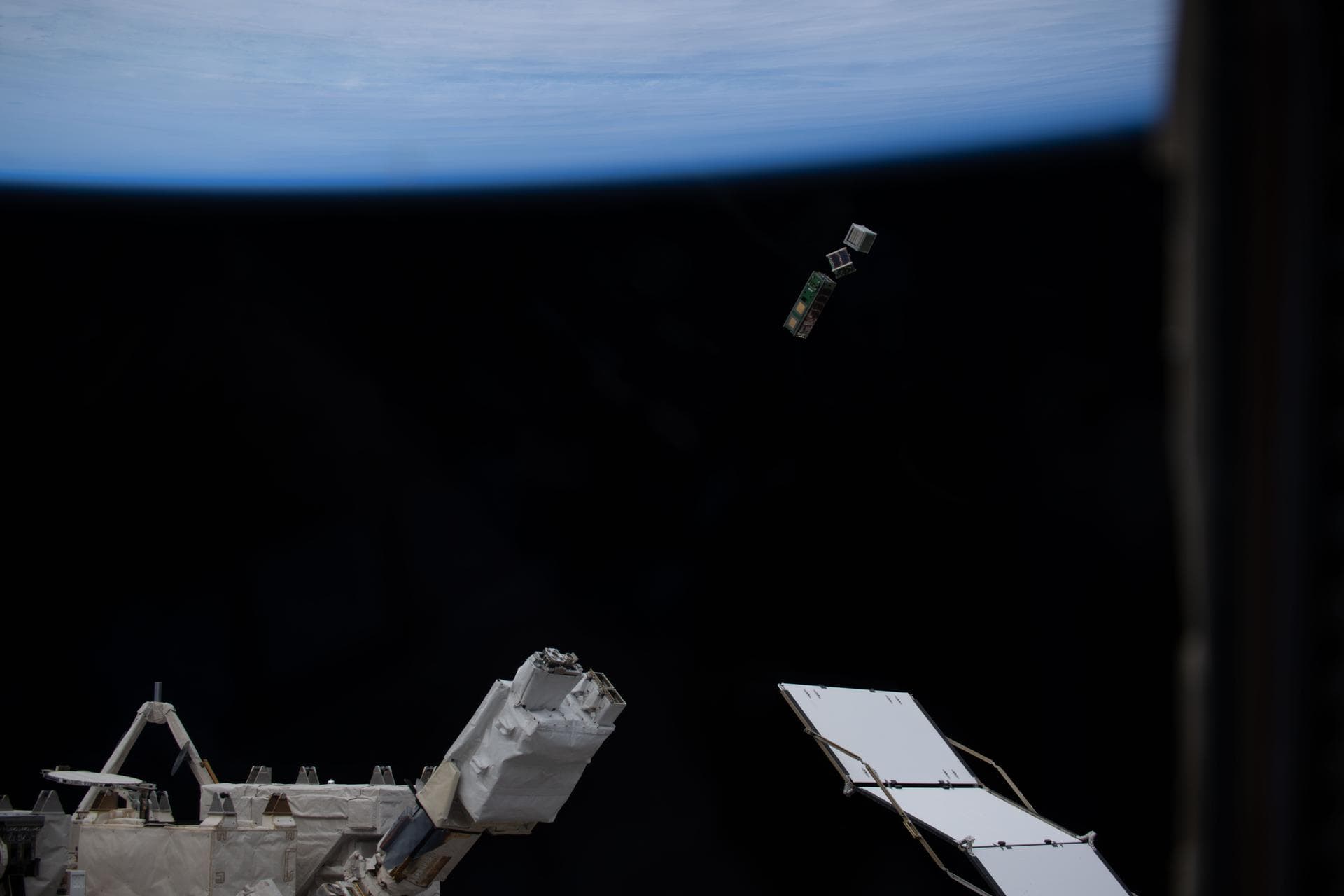
The International Space Station is a football-field-sized laboratory orbiting about 250 miles up, circling Earth every 90 minutes at 17,500 mph. Built and operated by the United States, Russia, Europe, Japan, and Canada, it has hosted people without interruption for over two decades, the longest continuous human presence off the planet.
Crews of about seven conduct thousands of experiments in microgravity, from growing organs-on-chips to studying how the human body handles long spaceflight. Astronauts rotate up on SpaceX Dragon and Soyuz spacecraft, with cargo arriving on commercial resupply flights.
Nearly everything NASA knows about keeping humans alive in space for months at a time was learned on the ISS. That knowledge is the foundation for Artemis lunar stays and eventual Mars trips. It is also where commercial spaceflight grew up: the companies now flying crews cut their teeth on station contracts.
Key Facts
- Continuously crewed since
- November 2, 2000
- Orbit
- About 250 miles up, 17,500 mph, 16 orbits per day
- Crew
- Typically 7
- Partners
- NASA, Roscosmos, ESA, JAXA, CSA
- Size
- About the length of a football field, 420 tons
Timeline
November 1998
First module, Zarya, launches
November 2000
Expedition 1 begins continuous habitation
May 2020
First commercial crew flight, SpaceX Demo-2
Next up
Operations planned through 2030, then commercial successors
Latest International Space Station News
Waxing Gibbous Moon
The waxing gibbous moon is nestled in the darkness of space in this June 26, 2026, image from the International Space Station. The space station was 264 miles above the Indian Ocean southeast of Madagascar at the time. T
International Space Station
NASA Sets Coverage for Astronaut Anil Menon Launch to Space Station
NASA astronaut Anil Menon will launch aboard the Roscosmos Soyuz MS-29 spacecraft to the International Space Station on Tuesday, July 14, accompanied by cosmonauts Pyotr Dubrov and Anna Kikina, where they will join the E
International Space Station
Facts last reviewed 2026-07-11. Official mission page: nasa.gov