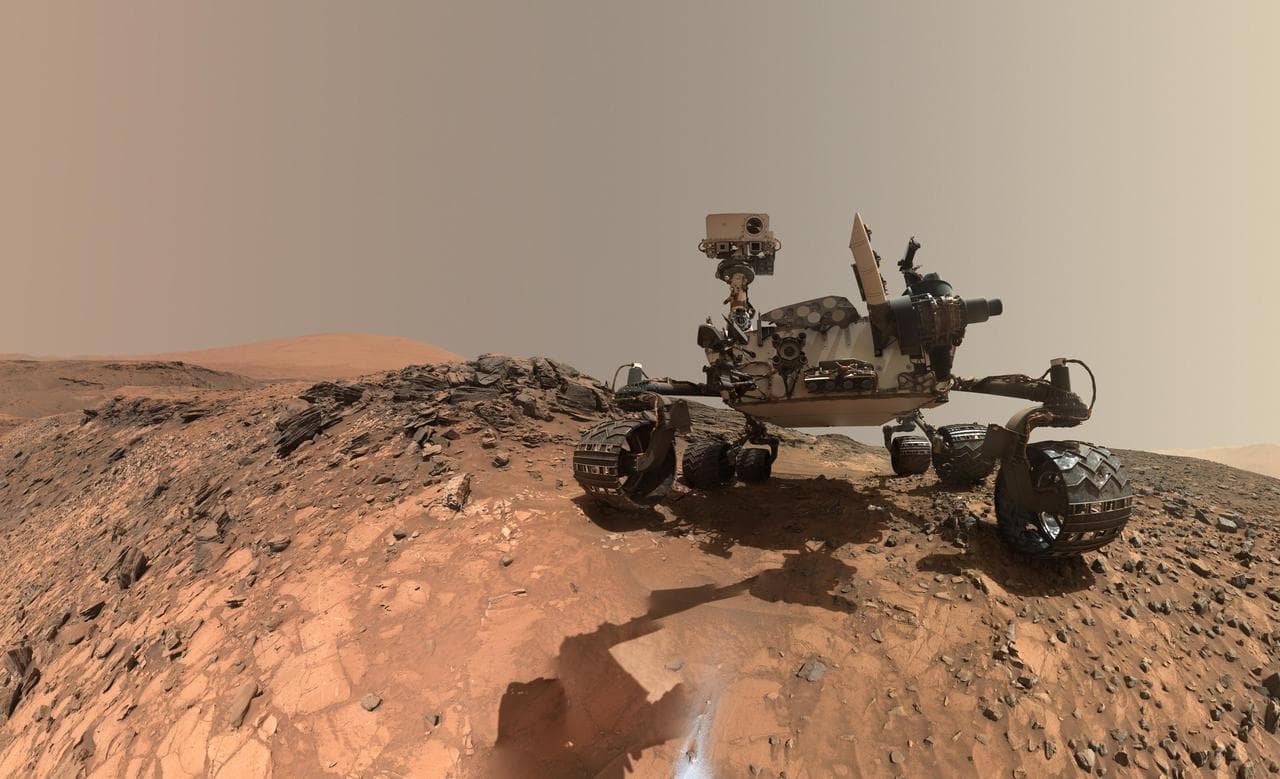
Curiosity is a car-sized, nuclear-powered rover that landed in Gale Crater in 2012 using the then-untested sky-crane maneuver. Its formal name is the Mars Science Laboratory, and it carries a full geochemistry lab: drills, ovens, spectrometers, and a laser that vaporizes rock from 20 feet away.
Since 2014 it has been climbing Mount Sharp, a 3-mile-high mound of layered sediment in the crater's center. Each layer is a page of Martian climate history, read in order as the rover ascends.
Curiosity settled the biggest question about early Mars: yes, it was habitable. It found an ancient lakebed with liquid water, key chemical ingredients for life, and organic molecules preserved in rock. Perseverance's hunt for actual biosignatures builds directly on that foundation.
Key Facts
- Landed
- August 6, 2012, Gale Crater
- Power
- Radioisotope generator (plutonium)
- Size
- About 1 ton, car-sized
- Key finding
- Ancient Mars was habitable
- Current work
- Climbing Mount Sharp's sediment layers
Timeline
November 2011
Launch from Cape Canaveral
August 2012
Sky-crane landing in Gale Crater, 'seven minutes of terror'
2013
Drilled samples confirm an ancient habitable lake
2014
Reaches the base of Mount Sharp
Next up
Continued ascent through younger rock layers
Latest Curiosity News
Curiosity Sees Martian Sulfur Up Close
This close-up view shows fragments of sulfur crystals — the first ever seen on the Red Planet. The crystals were found after NASA’s Curiosity Mars rover happened to drive over a rock and crush it on May 30, 2024. Several
Curiosity
Facts last reviewed 2026-07-11. Official mission page: nasa.gov