Voyager 1 and 2 launched weeks apart in 1977 to tour the outer planets, and never stopped. Voyager 2 remains the only spacecraft to have visited Uranus and Neptune. Both have now crossed the heliopause, the boundary where the Sun's influence gives way to interstellar space.
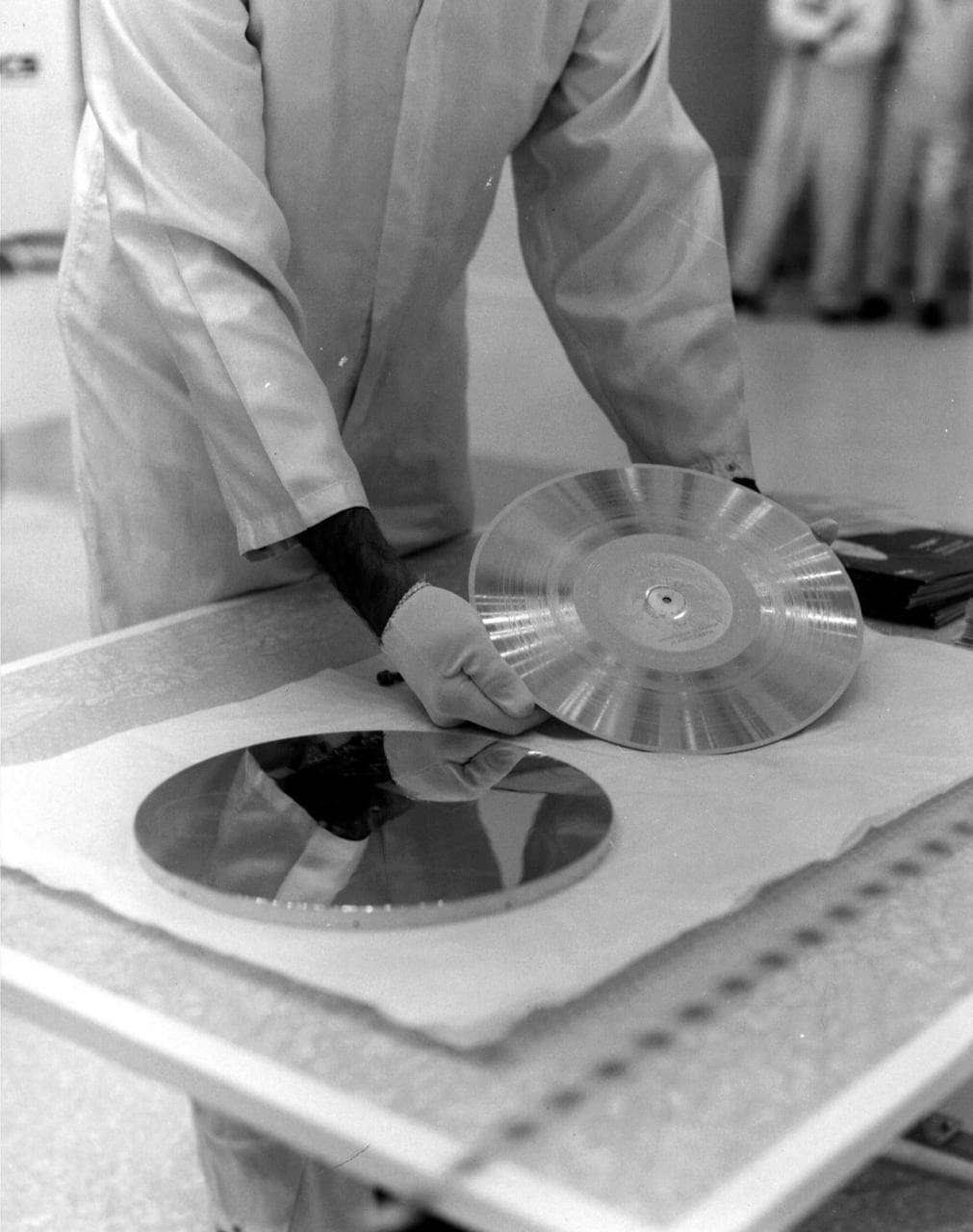
Each carries the Golden Record: sounds and images of Earth curated by Carl Sagan's team, a message in a bottle for any civilization that might find it. Their plutonium power supplies fade a little each year, and engineers keep them alive by switching off instruments one by one.
Voyager 1 is the most distant human-made object, over 15 billion miles out, and both probes are still returning data from a region no other spacecraft has reached. Every reading is the first and possibly last of its kind for decades. When one falls silent, humanity loses its only interstellar outpost.
Key Facts
- Launched
- 1977, sixteen days apart
- Voyager 1 distance
- Over 15 billion miles, interstellar space
- Unique visits
- Voyager 2: only spacecraft to Uranus and Neptune
- Signal travel time
- Almost a full day, one way
- Cargo
- The Golden Record
Timeline
Summer 1977
Both probes launch from Cape Canaveral
1979-1989
Grand tour: Jupiter, Saturn, Uranus, Neptune
August 2012
Voyager 1 enters interstellar space
November 2018
Voyager 2 follows
Next up
Science operations continue as power allows
Latest Voyager 1 and 2 News
No recent stories for this mission. Browse the timeline above or all news on the homepage.
Facts last reviewed 2026-07-11. Official mission page: nasa.gov