Parker Solar Probe is a heat-shielded spacecraft that dives repeatedly through the Sun's corona, the outer atmosphere visible during eclipses. Its carbon-composite shield faces 2,500 degrees Fahrenheit while instruments behind it sit near room temperature.
In December 2024 it made its closest approach: 3.8 million miles from the solar surface at 430,000 mph, the fastest any human-made object has ever traveled. It is the first spacecraft to fly through the corona and the first NASA mission named for a living scientist, Eugene Parker.
The solar wind Parker studies drives space weather, which can knock out satellites, GPS, and power grids on Earth. Understanding why the corona is hundreds of times hotter than the Sun's surface has been a mystery for 80 years; Parker is answering it from inside.
Key Facts
- Launched
- August 12, 2018
- Record speed
- 430,000 mph (December 2024)
- Closest approach
- 3.8 million miles from the solar surface
- Heat shield
- Faces about 2,500°F
- Named for
- Eugene Parker, who predicted the solar wind
Timeline
August 2018
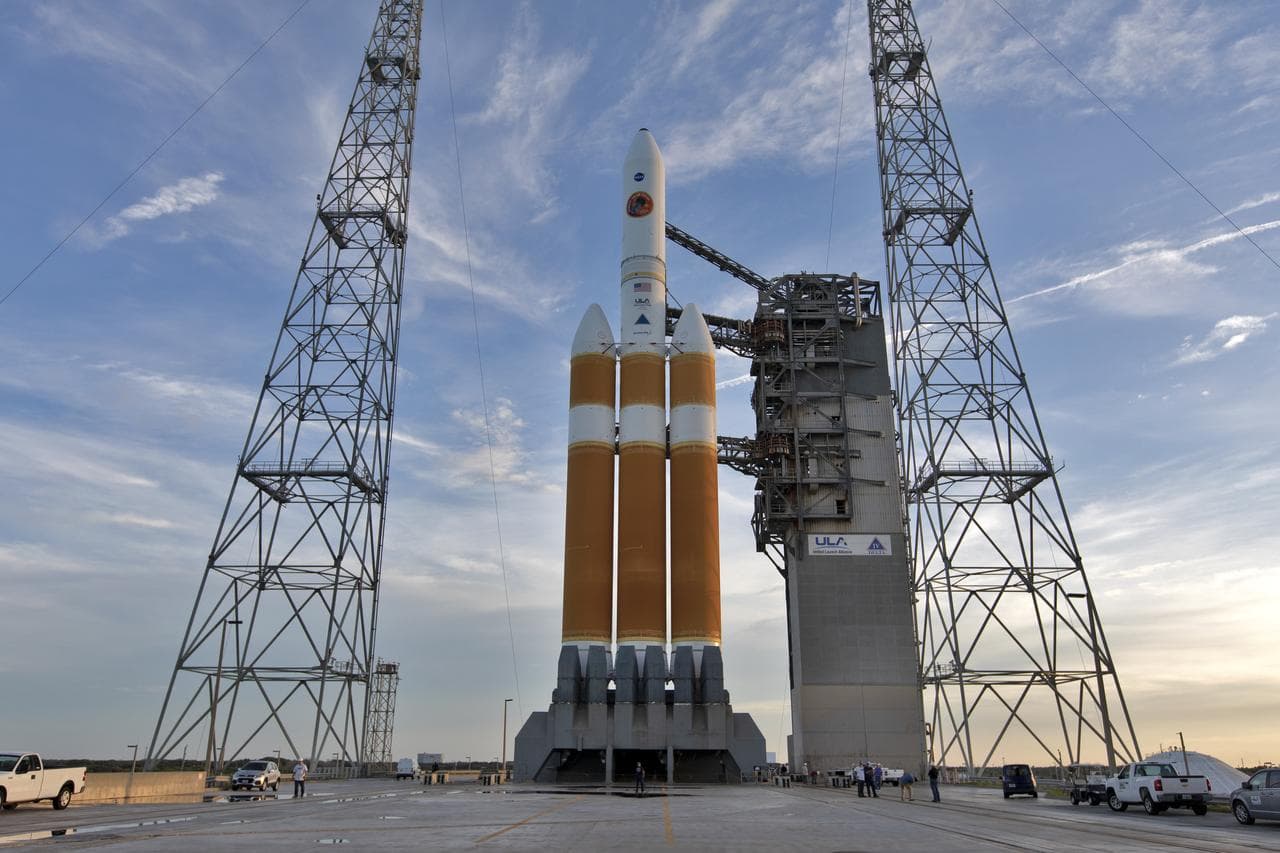
Launch from Cape Canaveral
December 2021
First spacecraft to fly through the corona
December 2024
Record closest approach and speed
Next up
Continued close solar passes
Latest Parker Solar Probe News
No recent stories for this mission. Browse the timeline above or all news on the homepage.
Facts last reviewed 2026-07-11. Official mission page: nasa.gov