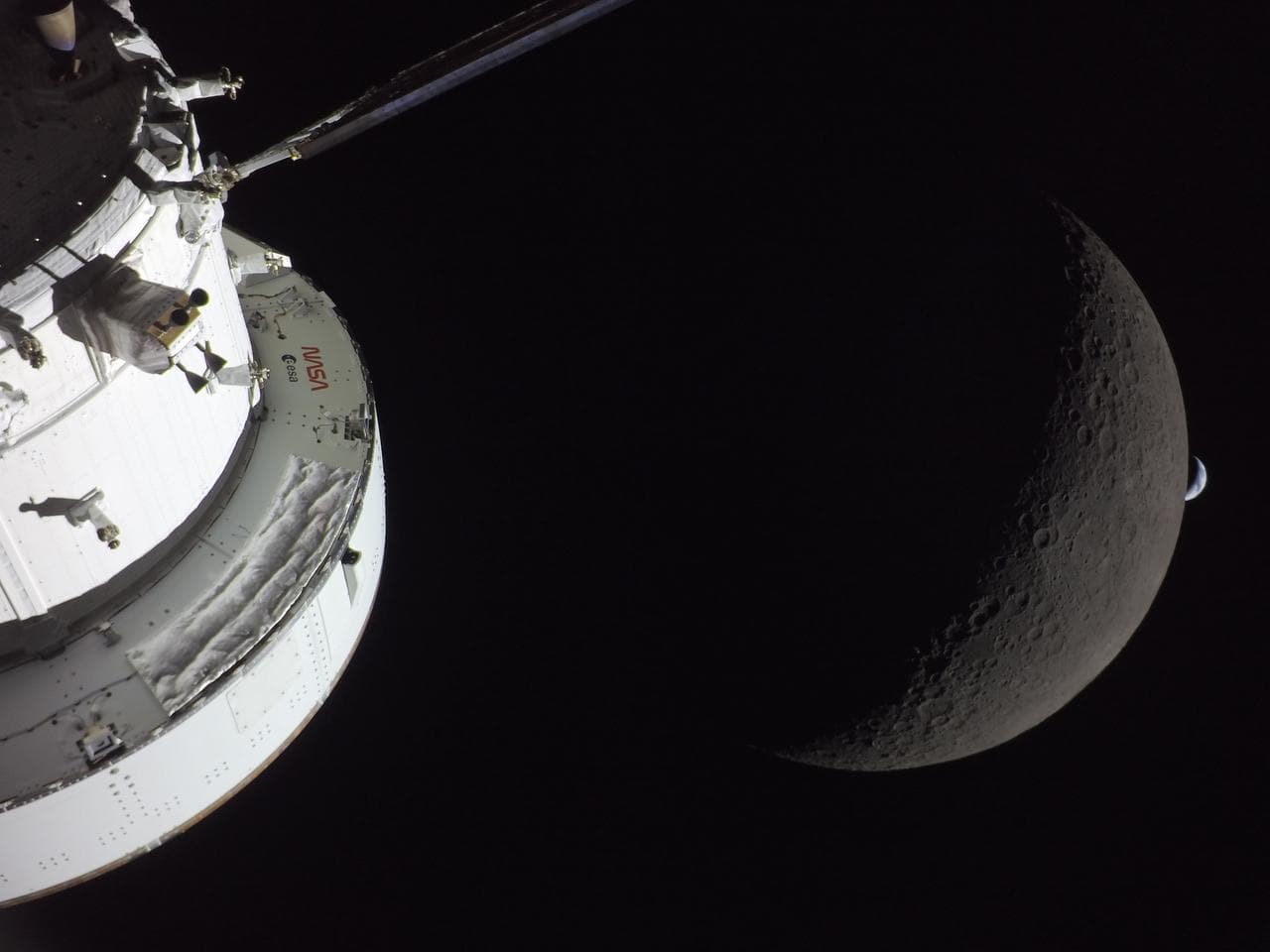
Orion is NASA's deep space crew capsule, built to keep four astronauts alive for weeks beyond low Earth orbit and to survive reentry at lunar-return speeds of 25,000 mph. The Space Launch System (SLS) is the rocket that throws it moonward: the most powerful rocket NASA has ever flown, producing 8.8 million pounds of thrust at liftoff.
The pair flew together for the first time on Artemis I in 2022, sending an uncrewed Orion 40,000 miles past the Moon and back. Orion's European-built service module supplies power and propulsion, making it NASA's most international crew vehicle.
No other spacecraft flying today is rated to carry humans beyond Earth orbit. Every Artemis crew rides Orion, and every Orion rides SLS. If this hardware slips, the Moon landing slips with it.
Key Facts
- First flight together
- Artemis I, November 2022
- Crew capacity
- 4 astronauts, up to 21 days free flight
- SLS thrust
- 8.8 million pounds at liftoff
- Service module
- Built by ESA (European Space Agency)
- Reentry speed
- About 25,000 mph from lunar return
Timeline
December 2014
Orion's first uncrewed test flight, EFT-1, on a Delta IV Heavy
November 2022
First SLS launch sends Orion around the Moon on Artemis I
December 2022
Orion survives lunar-velocity reentry and splashes down
Next up
Artemis II crewed flight, planned
Latest Orion and SLS News
No recent stories for this mission. Browse the timeline above or all news on the homepage.
Facts last reviewed 2026-07-11. Official mission page: nasa.gov