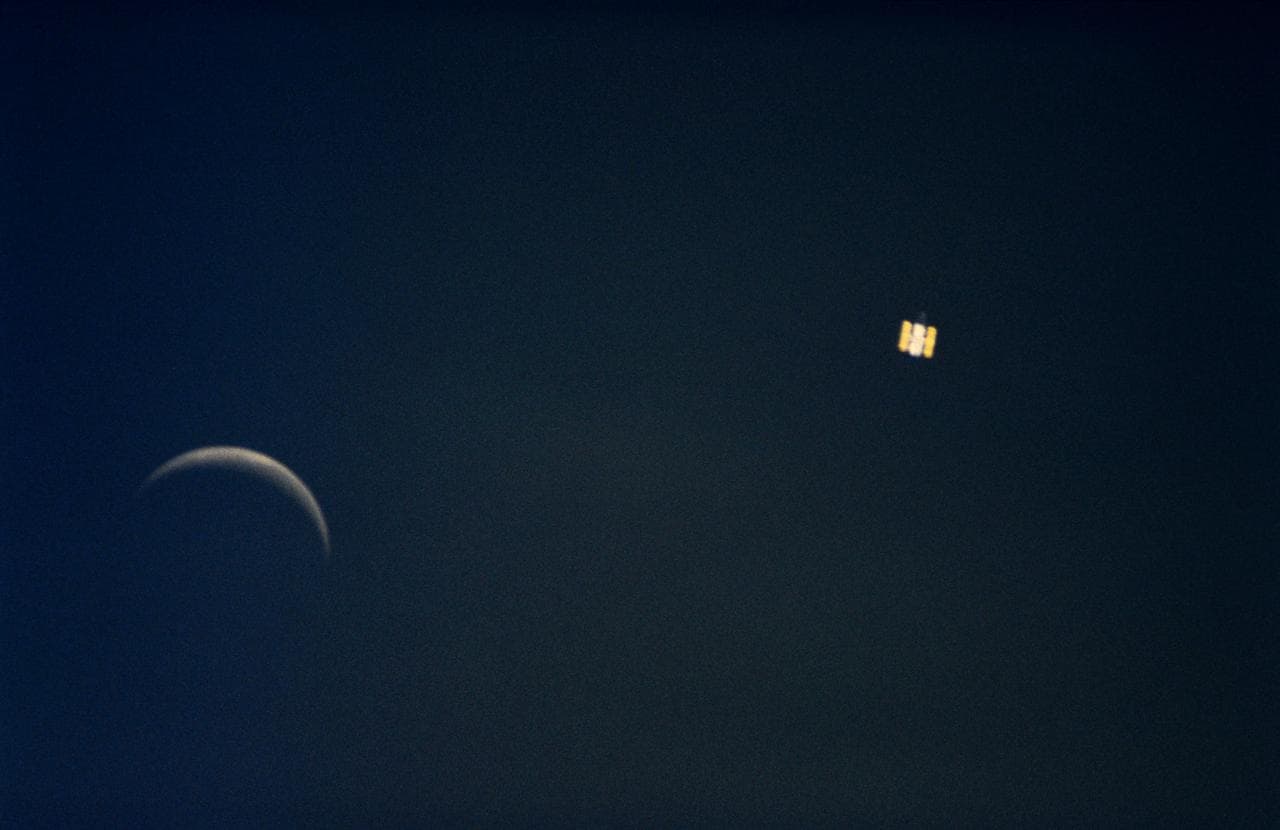
The Hubble Space Telescope is a 2.4-meter observatory that has orbited Earth since 1990, above the atmosphere that blurs ground-based views. Five space shuttle servicing missions repaired and upgraded it, including the famous 1993 fix for its flawed mirror.
Hubble sees mostly visible and ultraviolet light, which makes it a partner to Webb's infrared view rather than a predecessor put out to pasture. Together they observe the same targets in different wavelengths.
Hubble measured the age of the universe, proved supermassive black holes exist, imaged the first confirmed exoplanet atmosphere, and produced the deep field images that showed thousands of galaxies in a speck of empty sky. Thirty-five years in, it still observes almost every day.
Key Facts
- Launched
- April 24, 1990, aboard shuttle Discovery
- Orbit
- About 320 miles above Earth
- Mirror
- 2.4 meters
- Servicing missions
- 5 (1993-2009)
- Sees in
- Ultraviolet, visible, and near-infrared
Timeline
April 1990
Launch and deployment from shuttle Discovery
December 1993
First servicing mission corrects the mirror flaw
1995
Original Deep Field image reveals thousands of distant galaxies
May 2009
Final servicing mission extends its life
Next up
Continued joint observations with Webb
Latest Hubble Space Telescope News
No recent stories for this mission. Browse the timeline above or all news on the homepage.
Facts last reviewed 2026-07-11. Official mission page: nasa.gov