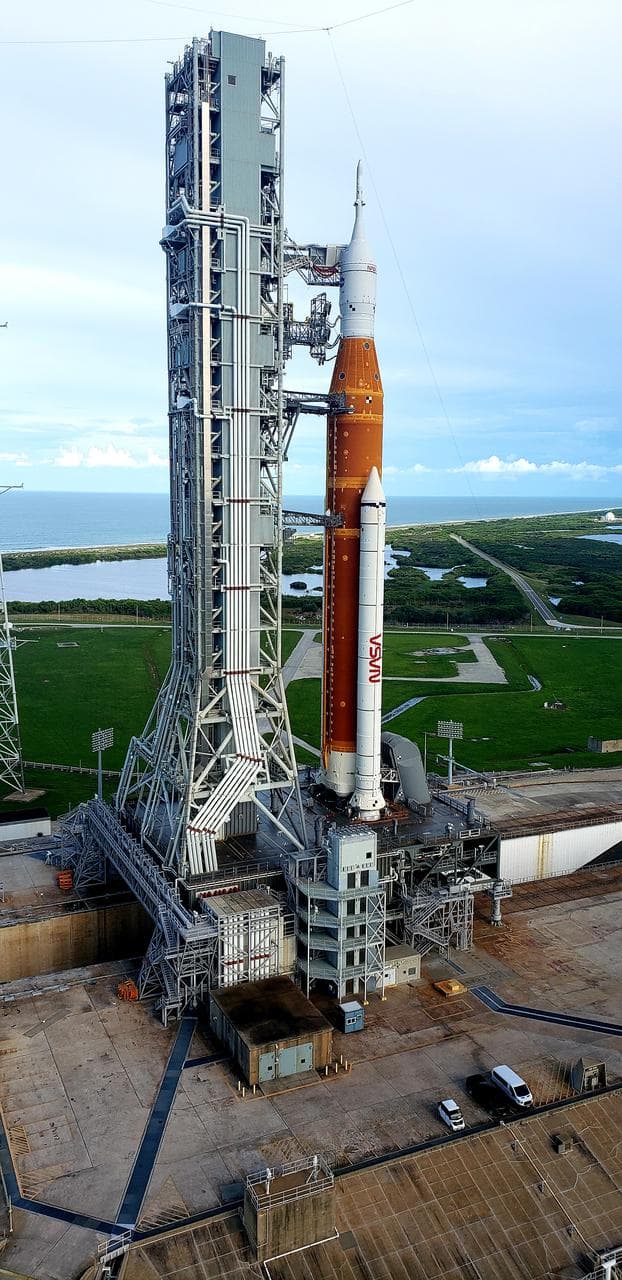
Artemis is NASA's flagship human spaceflight program, named for the twin sister of Apollo. Where Apollo planted flags and left, Artemis aims to stay: the plan is a sustained human presence on and around the Moon, including the first woman and the first person of color to walk on the lunar surface.
The program combines the Space Launch System rocket, the Orion crew capsule, the planned Gateway station in lunar orbit, and commercial landers. Artemis I flew an uncrewed Orion around the Moon in 2022. Artemis II will carry a crew on a lunar flyby, and Artemis III aims to land astronauts near the lunar south pole.
The lunar south pole holds water ice, which can become drinking water, breathable air, and rocket fuel. A crew that can mine, refine, and live off lunar ice is a crew that can survive on Mars. Apollo visited the Moon; Artemis is trying to make it a place people work.
Key Facts
- First flight
- Artemis I, November 16, 2022 (uncrewed)
- Destination
- Lunar orbit and the lunar south pole
- Rocket
- Space Launch System (SLS)
- Crew vehicle
- Orion capsule
- Goal
- Sustained human presence on the Moon, then Mars
Timeline
December 2017
Program directed by Space Policy Directive 1
November 2022
Artemis I: uncrewed Orion flies around the Moon and returns
December 2022
Orion splashes down after a 25-day, 1.4-million-mile flight
Next up
Artemis II crewed lunar flyby, planned
Latest Artemis News
No recent stories for this mission. Browse the timeline above or all news on the homepage.
Facts last reviewed 2026-07-11. Official mission page: nasa.gov